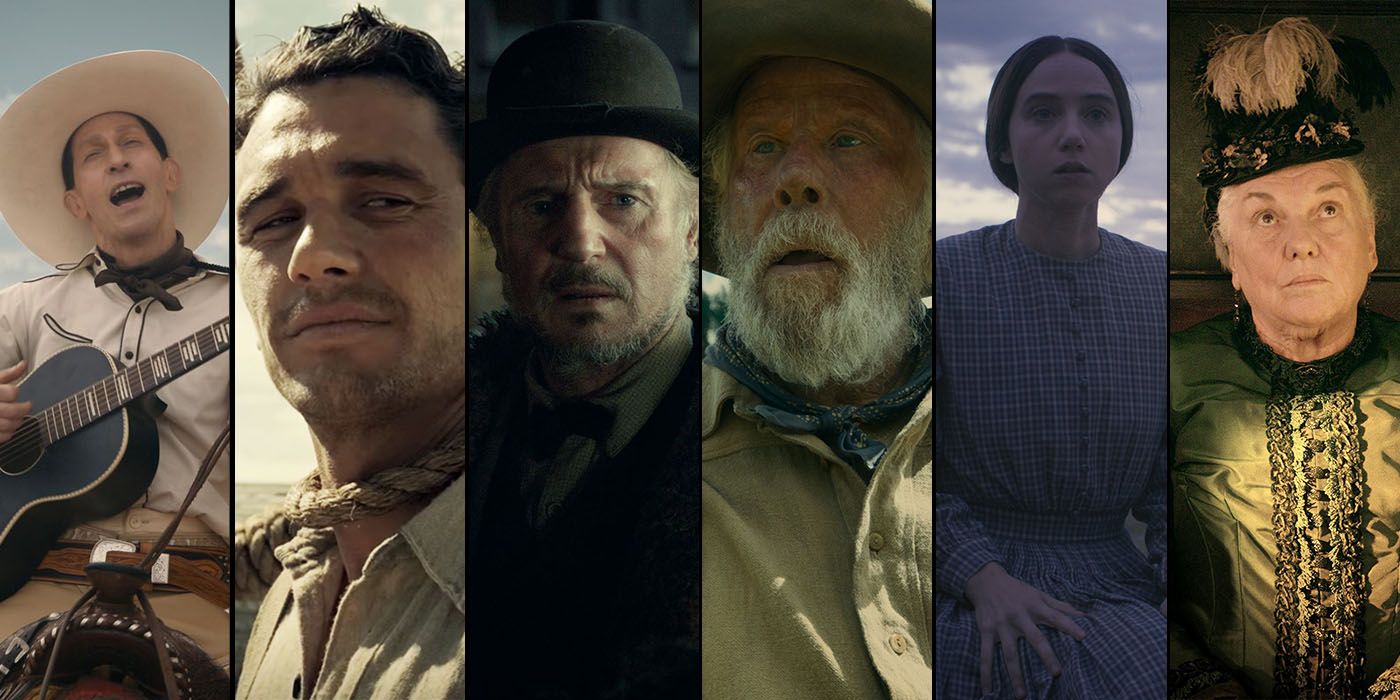
Warning: SPOILERS Below For The Ballad of Buster Scruggs!
-
Academy Award-winning directors Joel and Ethan Coen return to the Old West in The Ballad of Buster Scruggs, a Netflix-produced anthology of six Western stories that each have thought-provoking endings.
Presented as a book of Old West tall tales, the Coens brothers wrote these short stories over the course of 25 years. The chapters alternate between absurd, humorous, tragic, and surreal, and play with different tropes of the Western. Each short is a standalone story, with the Coens not crossing over any characters or even settings. Rather, the common denominator of the half-dozen chapters is thematic; the shorts deal with the many different harsh realities of life in the Old West but especially death, which visits the characters in every story.
Related: Screen Rant's Ballad of Buster Scruggs Review
Whether it's the violently farcical musical exploits of Buster Scruggs himself or the haunting and ghostly final carriage ride of the sixth and final short, here are the underlying themes and meanings of each chapter of The Ballad of Buster Scruggs' endings:
- This Page: The Ballad of Buster Scruggs and Near Algodones
- Page 2: Meal Ticket and All Gold Canyon
- Page 3: The Gal Who Got Rattled and The Mortal Remains
The Ballad of Buster Scruggs Is A Dark Looney Tunes Cartoon
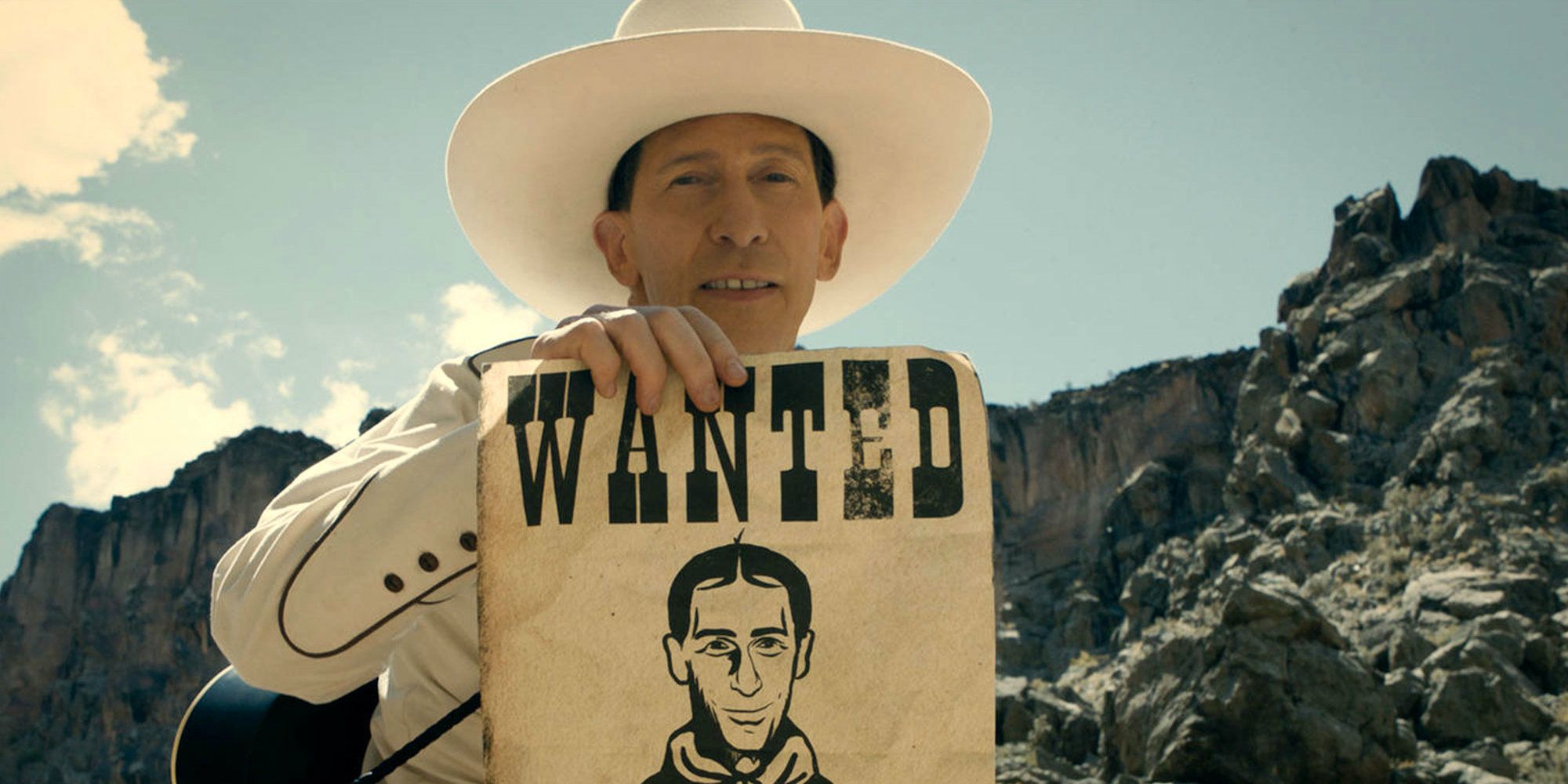
In the first short, The Ballad of Buster Scruggs, Tim Blake Nelson plays the affable singing cowboy who prefers to be known as "The San Saba Songbird". Riding through the desert with his trusty horse Dan, Buster stops at a cantina for some whiskey where he shoots down several outlaws who start trouble with him, displaying incredible skill and timing with a pistol. Continuing on his way, Buster arrives at the town of Frenchman's Gulch where he tries his hand at a card game in the saloon and is forced to kill the local rogue named Surly Joe (Clancy Brown). After leading the saloon in a hilarious song mocking Surly Joe and then besting Joe's brother in a duel, another singing cowboy called the Kid (Willie Watson) arrives to challenge Buster to a duel. Overconfident, Buster accepts and is immediately shot in the head before he even realized what happened. Now the new top gun, the Kid walks away as Buster's spirit ascends to Heaven, sharing a final duet with the Kid.
The Ballad of Buster Scruggs is an absurd, dark comedy, much like a Bugs Bunny cartoon. Buster breaks the fourth wall to constantly talk to the audience, and while he seems harmless and ridiculous, his white hat belies the reality that he is matter-of-fact deadly. Though Buster is polite and a good sport, he also understands that in the Old West, people are mean-spirited and prone to cheating and ill-behavior. He's never surprised when he's greeted with the threat of violence everywhere he goes, and he understands that death can come at any moment, especially since he's used to be being the one who delivers it.
Buster explains that things escalate quickly in the Old West with one thing leading to another - including his own sudden demise to the Kid, who specifically came to down to take Buster down. "You can't stay top dog forever," Buster says after he's shot in the head. The short is a treatise about human nature, ending with Buster's ghost (complete with angel wings) hoping that the next place he's going isn't filled with the same kind of rotten people he dealt with in life.
Related: Netflix Killed Luke Cage and Iron Fist Itself
Near Algodones Is About The Inevitable
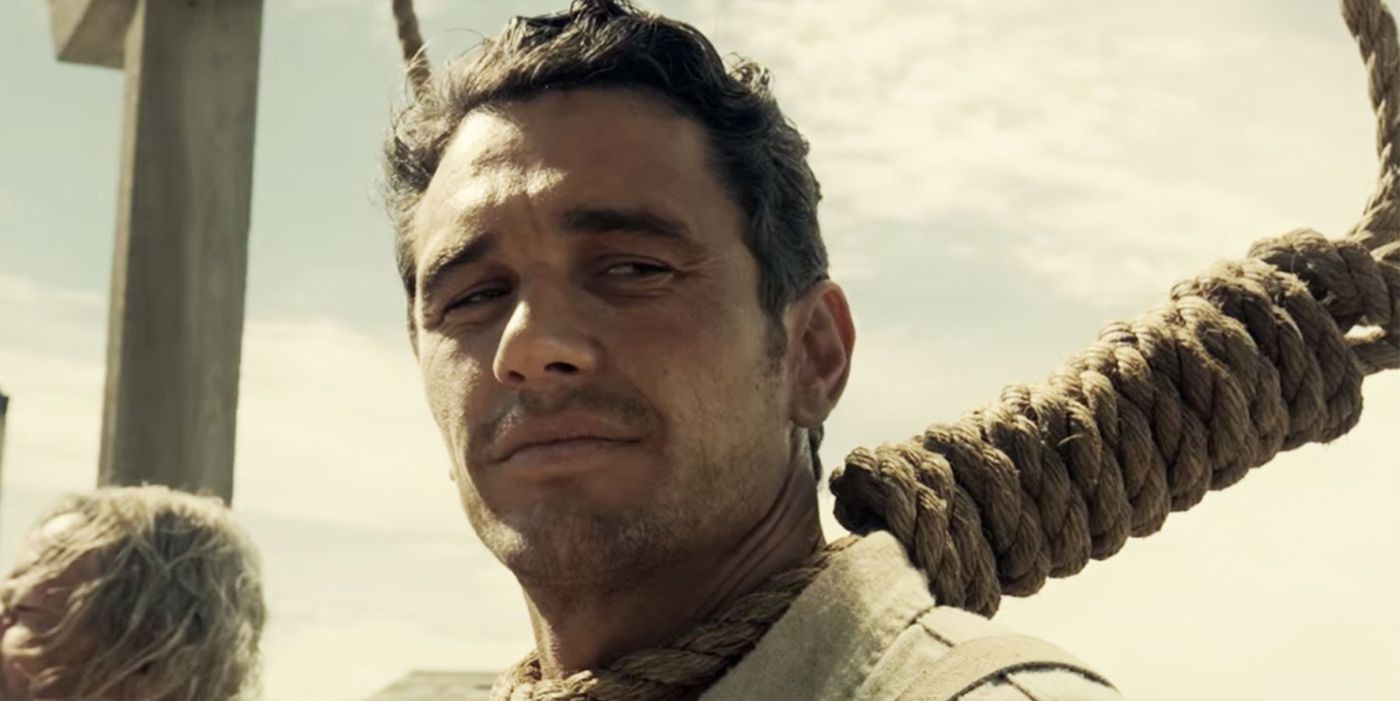
In Near Algodones, a cowboy (James Franco) tries to rob a bank, but the simple stick-em-up goes completely awry. Despite the bank teller (Stephen Root) cheerfully telling the cowboy about how he violently foiled the previous two attempts by bandits to rob his bank, the cowboy takes his shot and finds the teller extremely well-armed; after chasing the cowboy outside, the teller, clad in tin armor, knocks the cowboy out. The cowboy awakens with a noose around his neck but the posse looking to string him up is attacked by Comanche. The cowboy is finally saved by a cattle rustler (Jesse Drover) only to be set upon by lawmen and find himself in town with another noose around his neck. This time, nothing stopped the cowboy from being hanged.
Near Algodones is the shortest and snappiest tale of the six and nicely proves The Ballad of Buster Scrugg's point about escalation in the Old West. Essentially, the cowboy's fate was sealed when he decided to rob the bank and Death was assured despite how he seemingly escaped being hanged by sheer luck. The irony here is the cowboy was ultimately executed for rustling livestock and not for his attempted bank robbery, but the Coen Brothers are playing with the fact that he was done for no matter what. The cowboy does see the irony in his situation - his second time in a noose that day - and jokes, "First time?" to the man breaking down in tears next to him on the galley. At least the last thing the cowboy sees is a pretty girl before his quick and violent end.
Page 2: Meal Ticket and All Gold Canyon

Meal Ticket: That's Showbiz, Folks!
In the grim Meal Ticket, an Impressario (Liam Neeson) arrives in a town and advertises a show by "Harrison: 'The Wingless Thrush' - Celebrated Thespian, Orator, and Entertainer." The performance is a one-man show by the Artist (Harry Melling), an actor with no arms or legs. The Artist performs "Ozymandias", various bits of Shakespeare, and closes with "The Gettysburg Address". The initial performance goes well, with a reasonably large and appreciative crowd, but as they travel from town to town, the crowds grow smaller and their profits dwindle. After a poorly attended performance, the Impressario sees a huge crowd gathered to watch a show about a chicken can apparently count numbers. The Impressario purchases the chicken and then throws the Artist off a cliff to drown before heading to the next town with his new show.
Harsh and melancholy, Meal Ticket feels like The Ballad of Buster Scruggs' commentary on the predatory nature of show business. The Impressario seemed to care for the Artist (and we question whether they may be father and son), but as the story continues, we realize they never speak to each other and the somber Artist seems to understand his literal shelf life has a time limit. The Impressario ridding himself of the burden of the Artist, whom he had to dress, help go to the bathroom, and spoon feed, is made easier for him because his profits are drying up. Their show was also highbrow, whereas the chicken that can count drew bigger crowds; the Impressario realized he can make more money catering to the lowbrow tastes of the poor and uneducated.
All Gold Canyon Is About Claiming What You Deserve
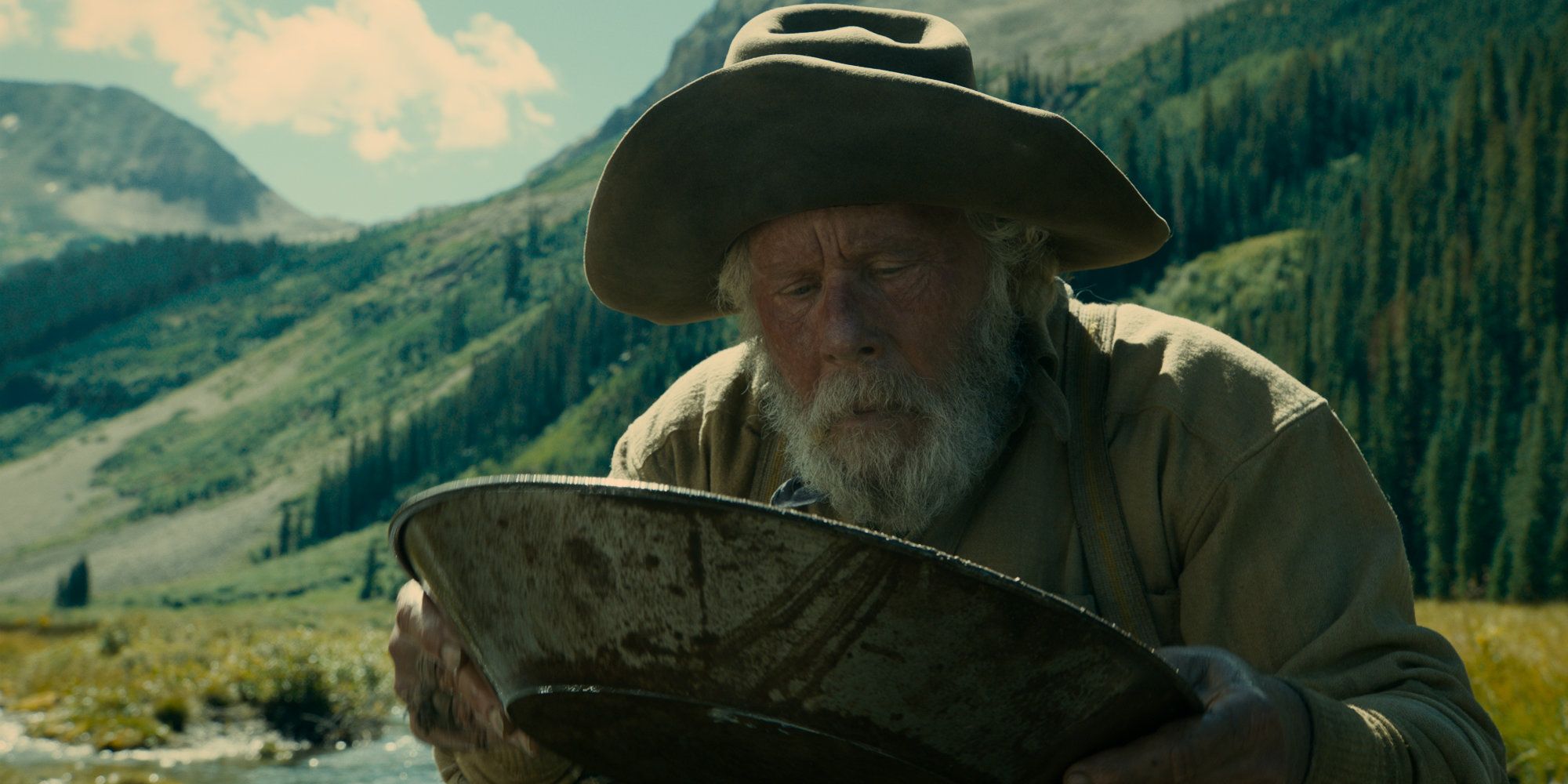
A lone prospector (Tom Waits) comes upon a beautifully scenic canyon surrounded by trees and mountains and believes there's a pocket of gold to be unearthed by the river. Working diligently, he finds tiny nuggets in the dirt, which drives him further to find that pocket. The prospector digs deep into the earth and discovers the pocket, but his celebration is cut short when a man (Sam Dillon) who has been shadowing his claim shoots him in the back. The man doesn't realize that his shot didn't kill the prospector, who attacks and kills the man. After recovering from his wound, the prospector buries the man and leaves with his bags of gold.
With its breathtaking vistas and sweeping score, All Gold Canyon is the most inspirational of the shorts and is essentially a one-man show by Tom Waits. The prospector struggled into old age looking to strike it rich but he seems to have lived an honest, hard-working life. (As he tells his claim, which he calls 'Mr. Pocket', "I'm old, but you're older!") This speaks to the frontier spirit of the Old West and the romance of going forth to seek your fortune, that America and its riches were there to be claimed. The prospector also respects the nature he's trying to earn his living from; he returned (most of) the eggs he found in a nest when he saw the owl who laid them watching.
All of this is why the prospector was so incensed by the man who tried to steal his claim; not only did he shoot the prospector in the back, but he watched all along while the prospector did all of the work, just waiting to swoop in and take it all for himself. However, the prospector, who earned all of the gold in the canyon, not only lived but triumphed in the end, claiming his just rewards. Essentially, this is a form of the American Dream, which a lucky few were indeed able to achieve in the Old West.
Page 3: The Gal Who Got Rattled and The Mortal Remains
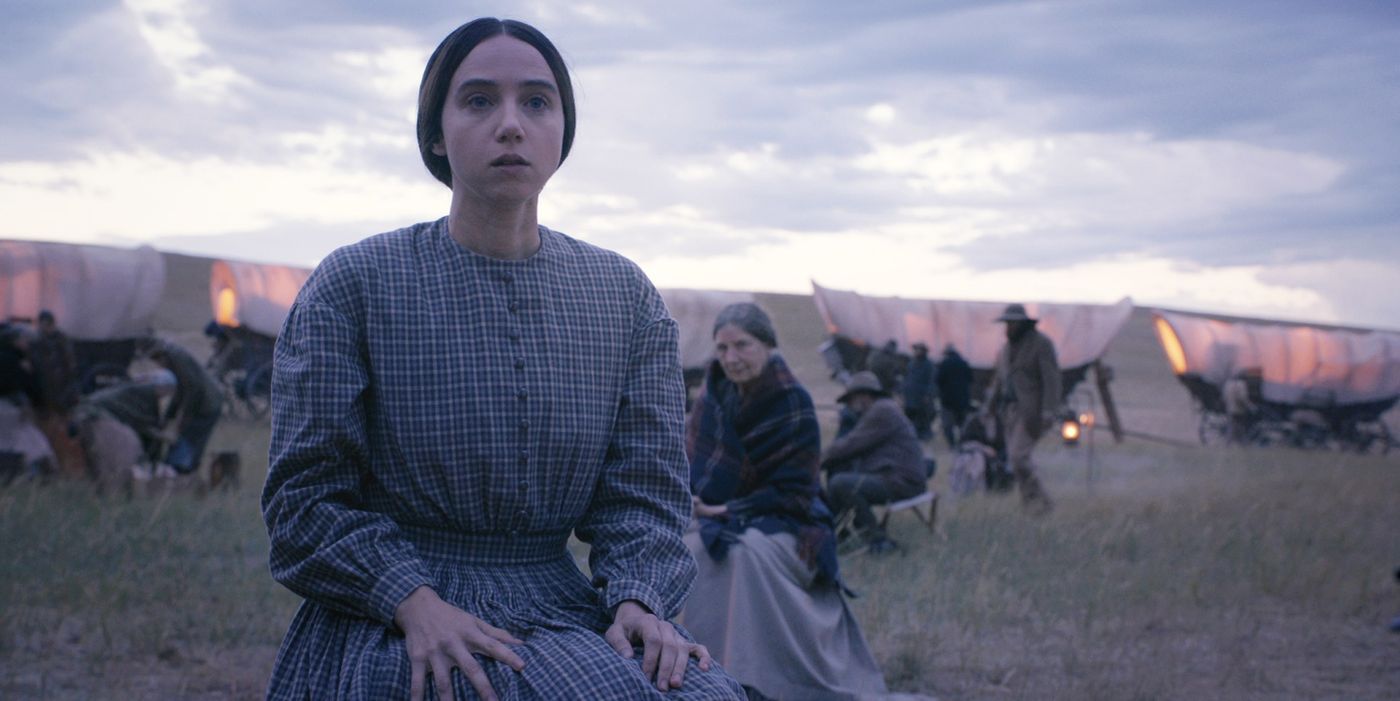
The Tragic Pragmatism Of The Gal Who Got Rattled
Gilbert (Jefferson Mays) and Alice Longabaugh (Zoe Kazan) are a brother and sister en route via wagon train to Oregon in The Tragic Pragmatism. On the trail, Gilbert dies of cholera, leaving Alice with no money, a $400 debt to Matt (Ethan Dubin), the boy running their wagon, and an uncertain future in Oregon. Billy Knapp (Bill Heck), the kindly cowboy in charge of the train, befriends Alice and, as he has grown tired of his life working the trail, he asks Alice to marry him, thereby assuming her debts and giving them both a future. Alice accepts his proposal; later, Billy's partner Mr. Arthur (Grainger Hines) finds Alice after she has wandered off the trail and they are attacked by Comanche. As he prepares to fight them off, Arthur hands Alice a pistol and instructs her to shoot herself if he is killed so that she isn't taken captive by the Comanche. Arthur is seemingly killed but survived and fought off the horde only to find Alice did as he instructed and killed herself when she thought Arthur had died.
Alternating between sweetness and tragedy, The Gal Who Got Rattled is really about the follies of rigidly adhering to pragmatism. The longest and most complex of the shorts in The Ballad of Buster Scruggs, the story begins with Alice following her failed businessman brother to Oregon, where she is ostensibly being traded as a bride-to-be to his prospective employer. After Gilbert dies, Alice's concerns are about settling his debts, while Billy Knapp gradually melds his romantic interest in Alice with his ability to legally solve her economic problems. Pragmatism even comes into play with Gilbert's dog, President Pierce, who Alice agrees to be put down because he annoys the wagon train with his barking. However, President Pierce not only escapes Billy's attempt at euthanasia, he ultimately survives both Gilbert and Alice.
Related: What's Next In Netflix's Future?
Alice's pragmatism leads to a sad end when she does exactly as she was instructed by Mr. Arthur and commits suicide, not realizing he survived his fight with the Commanche. It's doubly tragic because Billy is a good and considerate man who was looking forward to starting a new life with Alice, though he troubled him to leave behind the older Mr. Arthur, his mentor and partner of 15 years. In the Old West, even good people trying to do the right thing can have fortune backfire on them.
The Mortal Remains Is A Jolly Ride With Death
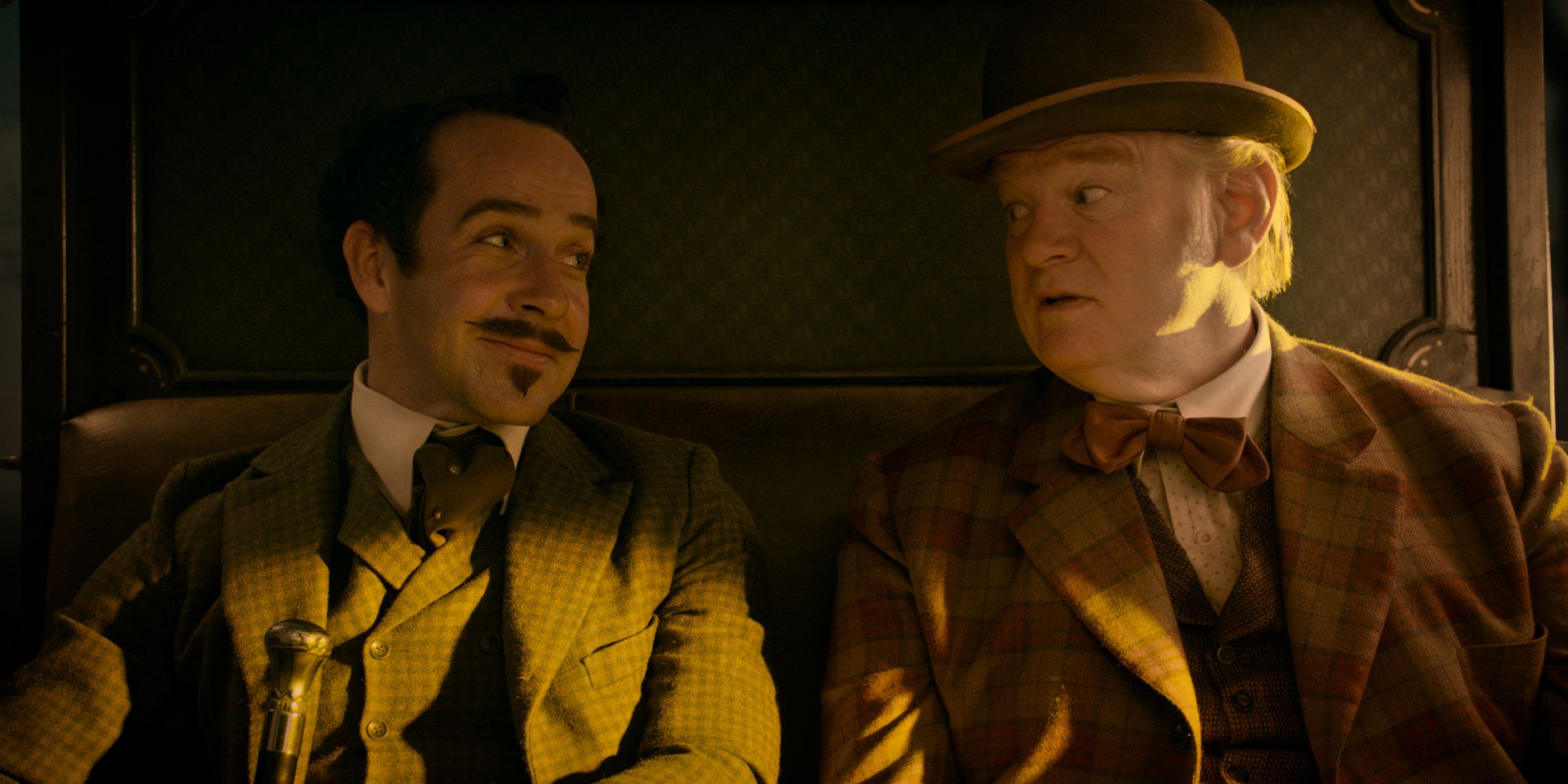
A lady (Tyne Daly), a trapper (Chelcie Ross), a Frenchman (Saul Rubenik), an Irishman (Brendan Gleeson), and an Englishman (Jojo O'Neill) share a stagecoach ride together. In between singing songs, the trapper regales the passengers about his life on the frontier and his sexual relations with a Comanche woman. The lady, who is religious and en route to reunite with her preacher husband, is offended by the trapper's life of sin. The Frenchman argues the nature of love with the lady, who has a momentary health scare. The Englishman then tells the story of how he and his Irish friend - they are both bounty hunters - captured their latest quarry, whose body is being transported on the roof of the stagecoach, and what it felt like to watch him die. Finally, they all arrive at their destination and enter the hotel.
The Mortal Remains is the only one of the shorts where no one dies, yet it's very much about death itself. It begins with the lady, the trapper, and the Frenchman arguing human nature. The trapper is convinced people are no different from the ferrets he skins for pelts, the lady sees only sinners and the righteous, and the Frenchman argues that people change and behave according to desire and circumstances. Whether or not any or all of them are correct, the bounty hunters' story argues that death is the inevitable common denominator.
However, it's strongly implied that the trapper, Frenchman, and lady are actually dead; the Irishman's final song is about a man who realizes he's been murdered and the Englishman said he and the Irishman like to think of themselves as "reapers... harvesters of souls" and not bounty hunters. The Englishman's story of the Midnight Caller is a treatise about how humans try to process the moment of their death, so the passengers are being driven to their final destination - the hotel at Fort Morgan - by their spectral coachman. The Mortal Remains slowly reveals itself as a supernatural tale and is a surreal punchline ending to The Ballad of Buster Scruggs.
Next: The 25 Best Films on Netflix Right Now
The Ballad of Buster Scruggs is available to stream on Netflix.
from ScreenRant - Feed https://ift.tt/2zeRxBn

0 comments:
Post a Comment